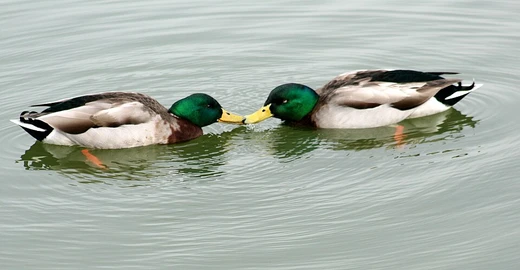
Animal coloration
Animal coloration is the appearance from light reflection or emission.

Animal coloration is the general appearance of an animal resulting from the reflection or emission of light from its surfaces. It has been a topic of interest and research in biology for centuries, with early observations by Aristotle and later detailed studies by naturalists such as Robert Hooke, Charles Darwin, Henry Walter Bates, Edward Bagnall Poulton, Frank Evers Beddard, Abbott Handerson Thayer, and Hugh Bamford Cott. Animal coloration provided important early evidence for evolution by natural selection.
- field
- Biology
- known_for
- Camouflage, mimicry, warning coloration, sexual selection, and structural colors
Lore & Background
Animals produce color directly through pigments or indirectly through chromatophores, and some have microscopic structures giving iridescent colors, while others can produce light.
Reader's Guide
Animal coloration has been central to evolutionary biology, providing early evidence for natural selection. The study encompasses camouflage, mimicry, warning coloration, and sexual selection, with contributions from Aristotle, Hooke, Darwin, Bates, Poulton, Beddard, Thayer, and Cott. The field has practical applications in military camouflage and continues to inform understanding of adaptation. The article notes that some claims, such as Thayer's assertion that all coloration is for concealment, were disputed and mocked, preserving the historical uncertainty. The mechanisms of color production—pigments, chromatophores, structural colors, and bioluminescence—are diverse and often combined.
Did You Know?
- Aristotle recorded that the octopus could change its coloration to match its background.
- Robert Hooke described the peacock's feather colors as 'fantastical' because wetting destroyed them.
- Edward Bagnall Poulton coined the term aposematism for warning coloration.
The Many Purposes of Animal Color
Animals display coloration for a remarkable range of reasons. Some species rely on camouflage to stay hidden from predators, while others use bold patterns to startle attackers or confuse them through rapid motion—zebras, for instance, may dazzle predators by moving their striped patterns quickly. Color also serves as a communication tool: animals advertise services like cleaning to other species, broadcast their sexual status to potential mates, or borrow the warning signals of toxic species through mimicry. Beyond survival and reproduction, coloration can provide physical protection, as pigments in some animals' skin shield them from sunburn, while certain frogs adjust their skin tone to regulate body temperature. Interestingly, some coloration is purely incidental—blood appears red simply because the haem pigment required for oxygen transport happens to be red. These diverse functions often overlap, and a single animal may combine several mechanisms simultaneously to achieve the visual effect it needs.
How Animals Generate Color
Animals produce visible color through both direct and indirect biological mechanisms. Direct coloration comes from pigment—particles of colored material that appear as freckles or other visible markings. Indirect coloration involves chromatophores, pigment-containing cells such as hair follicles, whose internal pigment distribution can shift under hormonal or neuronal control. In fish, chromatophores have been shown to respond directly to environmental cues including visible light, ultraviolet radiation, temperature, pH levels, and chemical signals, enabling rapid color changes that aid in camouflage and agonistic displays. Beyond pigments, many butterflies and birds possess microscopic structures within their scales, bristles, or feathers that produce brilliant iridescent colors through light interaction. Some animals, including squid and certain deep-sea fish, go further and generate their own light, sometimes in multiple colors. In practice, animals frequently combine two or more of these mechanisms to create the complex patterns and effects they require.
A Long Scientific History
The study of animal coloration stretches back to classical antiquity. Aristotle noted that octopuses could alter their coloration to blend with their surroundings or react to alarm. He demonstrated this by wetting the colored parts with water, which destroyed the iridescence and revealed the underlying mechanism. Henry Walter Bates, studying Amazonian butterflies in the 1860s, identified what we now call Batesian mimicry, where harmless species copy the appearance of toxic ones to deter predators.
Sexual Selection and Warning Signals
The relationship between coloration and mate choice became a major focus in the late nineteenth century. Poulton also introduced the concept of frequency-dependent selection, explaining why edible mimic species remain less common than the distasteful models they imitate. Most influentially, he coined the term aposematism to describe warning coloration, identifying it across a wide range of taxa—from skunks and bees to beetles and butterflies.
Frequently Asked Questions
What is animal coloration?
Animal coloration is simply how an animal appears visually, determined by the way its surfaces reflect or emit light. It covers everything from chemical pigments deposited in skin or feathers to microscopic structures that physically bend and scatter light.
Who were the key early researchers in animal coloration?
Aristotle made some of the earliest recorded observations, and later naturalists such as Charles Darwin, Henry Walter Bates, and Abbott Handerson Thayer built detailed frameworks around camouflage, mimicry, and warning signals. Frank Evers Beddard and Hugh Bamford Cott further refined the scientific understanding in the late 1800s and early 1900s.
What are the main categories of animal coloration fans usually discuss?
The core functional types are camouflage, mimicry, warning (aposematic) coloration, sexual-selection displays, and structural colors. Together these account for most of the roles coloration plays across the animal kingdom.
Why is animal coloration important to evolutionary biology?
It provided some of the earliest and most visually obvious evidence that natural selection shapes traits over generations. Patterns like Batesian mimicry and elaborate mating plumage gave Darwin and his successors concrete, observable examples of adaptation in action.
What's the difference between pigment-based and structural coloration?
Pigment colors come from chemical compounds that absorb some wavelengths and reflect others, producing a relatively flat hue. Structural colors arise from the physical micro-architecture of a surface bending light, which is why a peacock's tail shows shifting iridescence while a brown sparrow's feathers stay a steady melanin tone.
More in Animal Behavior 1-23
Spotted an error? Know more?
This is a living reference — every entry is fact-audited, and reader corrections feed straight into our audit queue. Suggest an edit · See this site's audit record