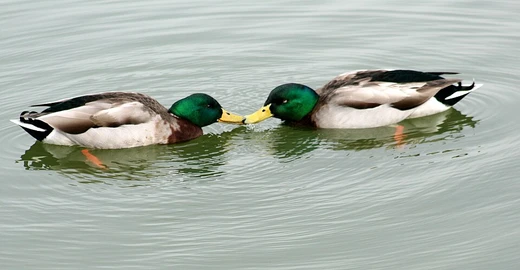
Thermoregulation
Organisms maintain body temperature within boundaries despite environmental variation.

Thermoregulation is the ability of an organism to keep its body temperature within certain boundaries, even when the surrounding temperature is very different. It is a key aspect of homeostasis, maintaining a state of dynamic stability far from thermal equilibrium with the environment. The study of such processes in zoology has been called physiological ecology.
- field
- Physiological ecology, zoology
- known_for
- Describing thermoregulation, hyperthermia, hypothermia, endothermy, ectothermy, homeothermy, and poikilothermy
Lore & Background
Thermoregulation involves internal processes that keep body temperature stable, while thermoconforming organisms adopt the surrounding temperature. Hyperthermia occurs when body temperature rises significantly above normal; humans may experience lethal hyperthermia when wet bulb temperature is sustained above 35 °C for six hours. Hypothermia sets in when core body temperature drops below 35 °C, usually from prolonged cold exposure. The introduction of thermometers allowed exact data on animal temperatures, revealing local differences due to varying heat production and loss. The rectum has traditionally been considered to reflect internal temperature most accurately.
Reader's Guide
Thermoregulation is fundamental to understanding how organisms survive diverse environments. Endotherms generate heat metabolically and maintain constant internal temperatures, while ectotherms rely on external sources and behavioral adaptations like sunbathing or seeking shade. Homeothermy refers to stable deep-body temperature, seen in most endotherms, while poikilothermy describes variable temperature, common in ectotherms. The preoptic area of the anterior hypothalamus controls thermoregulation in both groups. This concept underpins medical understanding of hyperthermia and hypothermia, and informs ecological studies of animal distribution and behavior.
Did You Know?
- Humans may experience lethal hyperthermia when wet bulb temperature is sustained above 35 °C for six hours.
- Hypothermia sets in when core body temperature drops below 35 °C.
- The rectum has traditionally been considered to reflect most accurately the temperature of internal parts.
- Some fish use natural antifreeze proteins to resist ice crystal formation in their tissues.
The Great Divide: Endothermy and Ectothermy
Thermoregulation exists on a continuum rather than a binary split. Endotherms, colloquially called warm-blooded, generate the bulk of their internal heat through metabolic activity, making their core temperature largely decoupled from ambient conditions. When the air turns frigid, they ramp up metabolic heat production to hold a steady internal set point. This capacity is underpinned by a higher density of mitochondria per cell compared to ectotherms, allowing faster oxidation of fats and sugars. Ectotherms, often mislabeled cold-blooded, rely almost entirely on environmental heat sources. Their internal physiological heat production is negligible, so they depend on behavioral strategies: basking in sunlight, seeking shade, climbing to warmer elevations, or entering warm water currents. Notably, many ectotherms actually maintain body temperatures within the same ranges as their warm-blooded counterparts, especially in stable tropical or marine habitats where behavioral thermoregulation has been refined over evolutionary time.
When the System Fails: Hyperthermia and Hypothermia
When thermoregulatory mechanisms break down, the consequences can be fatal. Hyperthermia strikes when body temperature climbs well above the normal roughly 37 °C baseline. A 2022 experimental study demonstrated that a wet-bulb temperature exceeding 30.55 °C produces uncompensable heat stress even in young, healthy adults, while sustained wet-bulb readings above 35 °C for six hours can prove lethal. At the opposite extreme, hypothermia sets in when core temperature drops below 35 °C, typically after prolonged cold exposure overwhelms the body's heat-generation capacity. The underlying cause is a malfunction in homeostatic heat control: the organism loses thermal energy faster than it can produce it. Treatment in both cases centers on restoring the body toward its normal range, either by aggressive cooling or by re-warming. These conditions underscore that thermoregulation is not a passive state but an active, energy-demanding process that can be overwhelmed by environmental extremes.
The Physics of Heat Exchange
Organisms deploy a toolkit of physical processes to gain or shed heat. Evaporation of sweat and other fluids draws thermal energy away from the body; convection transfers heat through moving air or water, which is why increasing blood flow to the skin maximizes heat loss; conduction occurs through direct contact with a cooler or warmer surface; and radiation releases infrared energy into the surroundings. Ectotherms exploit these same mechanisms behaviorally: a lizard pressing its belly against a hot rock gains heat through conduction and radiation, while folding its skin or concealing wing surfaces reduces radiative exposure. Endotherms face the opposite challenge in arid climates, where water conservation limits evaporative cooling. Furred mammals such as cats, dogs, and pigs possess sweat glands only on their foot pads and snouts, glands that primarily improve grip rather than cool the body, so they rely heavily on panting to evaporate water across the moist surfaces of the lungs, tongue, and mouth. Birds add gular fluttering, rapid vibrations of the throat region, to accelerate evaporative heat loss.
Measuring the Invisible and Sleeping Through the Cold
For centuries, the internal temperatures of animals remained guesswork until thermometers made precise measurement possible. Even then, researchers discovered that heat production and loss vary significantly across different body regions, and blood circulation works to average out internal temperatures. Identifying which external site best mirrors core organ temperature became a practical challenge; the rectum has traditionally served as the most reliable proxy, though in certain species or contexts the vagina, uterus, or bladder may be used. Crucially, all readings must be taken under comparable conditions to be meaningful. Beyond active thermoregulation, some animals temporarily suspend the process to conserve energy. Hibernating bears and bats entering torpor allow their body temperature to drift downward, trading thermal stability for metabolic savings. This dormancy represents a deliberate, reversible relaxation of the homeostatic set point, a reminder that thermoregulation is a flexible strategy rather than an absolute rule.
Frequently Asked Questions
What is Thermoregulation?
Thermoregulation refers to the biological mechanisms an animal uses to hold its internal temperature within a workable range, regardless of how hot or cold the outside world gets. It is essentially the body's built-in thermostat system.
What key concepts does Thermoregulation cover?
The topic spans a range of strategies, including endothermy (generating heat internally), ectothermy (relying on external heat sources), homeothermy (holding a steady temperature), and poikilothermy (letting temperature drift with the environment). It also addresses the dangerous extremes of hyperthermia and hypothermia when regulation breaks down.
How does Thermoregulation connect to homeostasis?
Thermoregulation is a core pillar of homeostasis, the broader principle of keeping internal conditions stable. Rather than simply settling at thermal equilibrium with the surroundings, an organism actively works to stay far from that equilibrium point.
Which scientific field studies Thermoregulation?
Research into these temperature-control processes in animals falls under physiological ecology within zoology. Scientists in this area examine how different species manage heat gain and loss across their natural habitats.
Why is Thermoregulation important for animal survival?
Without effective thermoregulation, an organism's enzymes and cellular machinery would falter, making life in a variable climate nearly impossible. It is the reason animals can remain functional whether they are basking in the sun or huddled in freezing water.
More in Animal Behavior 1-23
Spotted an error? Know more?
This is a living reference — every entry is fact-audited, and reader corrections feed straight into our audit queue. Suggest an edit · See this site's audit record