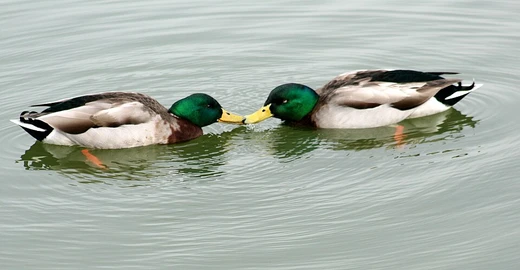
Animal consciousness
Debated quality of self-awareness in non-human animals.

Animal consciousness, or animal awareness, refers to the quality or state of self-awareness within an animal, or of being aware of an external object or something within itself. The topic is beset with difficulties, including the problem of other minds, as animals cannot communicate their experiences through human language. Philosophers and scientists have debated whether animals possess subjective experience, with some arguing that it can never be rigorously known, while others point to behavioral evidence and neural substrates.
- field
- Philosophy of mind, cognitive science, ethology
- key_thinkers
- René Descartes, Thomas Nagel, Douglas Hofstadter, Harvey Carr, Walter Veit
- key_declarations
- Cambridge Declaration on Consciousness (2012), New York Declaration on Animal Consciousness (2024)
- related_concepts
- Mind–body problem, epiphenomenalism, animal ethics
Lore & Background
The philosophical background of animal consciousness is rooted in the mind–body problem, which examines the relationship between mind and matter. René Descartes in the 17th century proposed Cartesian dualism, asserting that only humans possess a non-physical mind, while animals are mere mechanistic automata. This view has been criticized for enabling animal mistreatment. Later thinkers, such as Thomas Nagel, argued in his essay 'What Is it Like to Be a Bat?' that consciousness involves a subjective experience that cannot be fully accessed from an external perspective, while others like Douglas Hofstadter dismiss this argument as incoherent.
Reader's Guide
Animal consciousness has been actively researched for over one hundred years. The Cambridge Declaration on Consciousness in 2012 asserted that non-human animals, including mammals, birds, and octopuses, possess neural substrates for consciousness. In 2024, the New York Declaration on Animal Consciousness stated strong scientific support for consciousness in mammals and birds, and a realistic possibility in other vertebrates and many invertebrates. The denial of animal consciousness has been labeled 'mentophobia' by Donald Griffin, and ethical considerations have led to laws regulating pain relief for animals.
Did You Know?
- The Cambridge Declaration on Consciousness (2012) asserted that humans are not unique in possessing neurological substrates that generate consciousness.
- Thomas Nagel argued that no matter how much we know about an animal's brain and behavior, we cannot experience their world as they do.
- René Descartes is sometimes criticized for enabling animal mistreatment through his view that only humans are conscious.
- The New York Declaration on Animal Consciousness (2024) was signed by over 500 academics and scientists.
The Problem of Other Minds and Moral Stakes
The central difficulty in studying animal consciousness stems from what philosophers call the problem of other minds. Because animals cannot articulate their inner experiences through human language, we are left to infer awareness from behavior alone, making the question unusually resistant to objective resolution. This epistemic gap carries profound ethical weight: denying that an animal is conscious is frequently interpreted as claiming it cannot feel, that its existence carries no intrinsic worth, and that causing it harm is morally permissible. The 17th-century French thinker René Descartes became a frequent target of criticism for this reason. His mechanistic framework treated animals as complex machines devoid of inner life, a position that many later commentators believe opened the door to widespread animal mistreatment. The moral dimension means that the debate is never purely academic—every philosophical stance on animal awareness implicitly shapes how societies treat non-human creatures.
The Limits of Knowing Another Mind
Philosophers who treat subjective experience as the defining feature of consciousness face a particularly thorny epistemological problem: the existence and character of animal awareness can never be rigorously verified. The American philosopher Thomas Nagel articulated this position in his widely cited essay "What Is It Like to Be a Bat?" He proposed that an organism qualifies as conscious precisely when its existence carries some qualitative character—when there is, in a meaningful sense, something it is like to be that particular creature. Yet no amount of knowledge about an animal's neural architecture or observable behavior allows a human to genuinely inhabit that creature's perspective and feel its world as it does. This creates an irreducible gap between scientific description and lived experience. Not all thinkers accept this limitation. The cognitive scientist Douglas Hofstadter, for instance, has dismissed Nagel's argument as incoherent, suggesting the supposed barrier to understanding another mind may be less absolute than it appears. Meanwhile, psychologists and ethologists have built positive cases for animal consciousness by cataloging behaviors that suggest animals form beliefs about things they cannot directly perceive, a body of evidence reviewed in Walter Veit's 2023 philosophical work.
A Century of Scientific Inquiry and Landmark Declarations
The scientific investigation of animal awareness stretches back more than a century. The field reached a major milestone in 2012 when a group of neuroscientists signed the Cambridge Declaration on Consciousness, unequivocally asserting that humans do not hold a monopoly on the neurological foundations that give rise to consciousness. The declaration named all mammals and birds, as well as many other creatures including octopuses, as possessing these neural substrates. Momentum continued in 2024, when more than five hundred academics and scientists signed the New York Declaration on Animal Consciousness. That document affirmed strong scientific support for consciousness in mammals and birds, acknowledged it as a realistic possibility in other vertebrates and many invertebrates, and urged that these findings be factored into decisions affecting animals.
Philosophical Frameworks: Dualism, Monism, and Epiphenomenalism
Debates about animal consciousness are rooted in the mind–body problem: how consciousness relates to the physical brain. Dualism insists on a sharp separation between mind and matter, most famously developed by Descartes in the 17th century, who held that only humans possess a non-physical mind and interpreted animal behavior through a purely mechanistic lens. Monism, by contrast, maintains that there is only one fundamental substance of which both mind and matter are expressions. The rejection of the mind–body split became a hallmark of French Structuralism and post-war French philosophy, and monist-leaning approaches have proved especially influential in sociobiology, computer science, evolutionary psychology, and the neurosciences. A related position, epiphenomenalism, holds that mental phenomena are produced by physical brain processes rather than driving them. The feeling of fear, for example, does not cause a racing heart; both are symptoms of a shared physiological origin. Epiphenomenalism found fertile ground within scientific behaviorism, where early twentieth-century researchers such as Pavlov, Watson, and Skinner sought stimulus–response laws without reference to inner experience.
Frequently Asked Questions
Who is Animal consciousness?
Animal consciousness is the philosophical and scientific concept describing whether non-human animals possess subjective self-awareness or the capacity to perceive external objects and internal states. It sits at the intersection of philosophy of mind, cognitive science, and ethology, and remains one of the most contested topics in those fields.
What are Animal consciousness's powers or role?
The concept functions as a lens for evaluating whether animals have inner experiences, drawing on neural evidence, behavioral observations, and philosophical argumentation. It underpins broader debates about animal ethics, the mind–body problem, and whether subjective experience might be merely epiphenomenal.
How does Animal consciousness's story end?
There is no definitive resolution; the debate continues, though landmark documents like the 2012 Cambridge Declaration and the 2024 New York Declaration have shifted scientific consensus toward acknowledging non-human animal awareness. The core epistemic challenge—often called the problem of other minds—means the question can never be settled with absolute certainty.
Why is Animal consciousness important?
It directly shapes how societies legislate animal welfare, assign moral standing to non-human creatures, and frame research in neuroscience and behavioral ecology. Thinkers from Descartes to Hofstadter have used the question to probe deeper issues about what it means to have a mind at all.
Who are the key figures in Animal consciousness's story?
Major contributors include René Descartes, who famously denied animal inner life; Thomas Nagel, whose 'What Is It Like to Be a Bat?' reframed the entire debate; and Douglas Hofstadter, who explored self-awareness through cognitive modeling. More recently, Harvey Carr and Walter Veit have advanced the neuroscience and philosophy of animal experience.
More in Animal Behavior 1-23
Spotted an error? Know more?
This is a living reference — every entry is fact-audited, and reader corrections feed straight into our audit queue. Suggest an edit · See this site's audit record