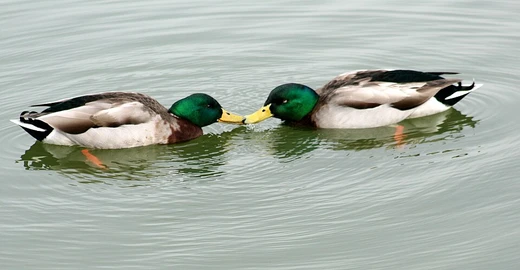
Bird vocalization
Bird vocalization includes songs and calls for communication.

Bird vocalization encompasses both bird calls and bird songs, with the distinction between them based on complexity, length, and context. In ornithology and birding, songs are relatively complex vocalizations associated with territory and courtship, while calls are simpler and serve functions such as alarms or keeping flock members in contact. The avian vocal organ, the syrinx, allows birds to produce a wide range of sounds, and some species also generate mechanical sounds using non-syringeal structures.
- field
- Ornithology, Bioacoustics
- key_terms
- Syrinx, Song, Call, Sonation
- primary_function
- Mate attraction and territory defense
- notable_order
- Passeriformes (best developed song)
- mechanical_sound_term
- Sonation (non-vocal communicative sounds)
Lore & Background
Bird vocalization is divided into songs and calls based on complexity, length, and context. Songs are longer and more complex, used for territory and courtship, while calls serve alarms or contact. Some authorities, such as Howell and Webb, define song by function, including short vocalizations and non-vocal sounds like woodpecker drumming. Others require syllabic diversity and temporal regularity akin to music. The syrinx, a bony structure at the bottom of the trachea, allows birds to produce sound by forcing air past membranes, with independent control of each side enabling some species to produce two notes at once. Mechanical sounds, termed sonation, are produced using non-syringeal structures like the bill, wings, or tail.
Reader's Guide
Bird vocalization is significant for understanding avian communication, evolution, and behavior. The distinction between songs and calls, though debated, provides a framework for studying how birds use sound for mate attraction, territory defense, and social interaction. Song complexity and repertoire size can indicate fitness, helping females select mates and males negotiate boundaries. Alarm calls and mobbing calls demonstrate cross-species communication and predator avoidance. The study of bird vocalization also informs broader topics such as sexual selection, neurobiology, and even paleontology, as seen in the 2023 finding of a fossilized larynx from an ankylosaur suggesting bird-like vocalizations. The ability of birds to mimic sounds and the role of post-breeding song in habitat selection further highlight the adaptive value of vocalization.
Did You Know?
- The avian vocal organ, the syrinx, is located at the bottom of the trachea, unlike the mammalian larynx at the top.
- Some birds can produce two notes at once by controlling the two sides of the trachea independently.
- In February 2023, scientists reported that ankylosaur dinosaurs may have made bird-like vocalizations based on a fossilized larynx.
More in Animal Behavior 1-23
Spotted an error? Know more?
This is a living reference — every entry is fact-audited, and reader corrections feed straight into our audit queue. Suggest an edit · See this site's audit record