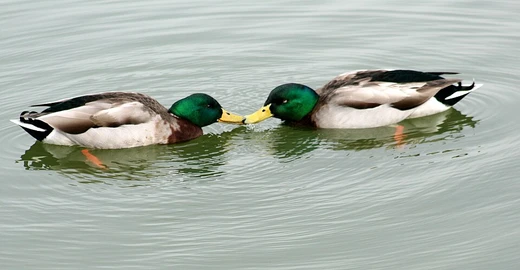
Ethology
Study of non-human animal behaviour combining laboratory and field science.

Ethology is a branch of zoology that studies the behaviour of non-human animals. Its scientific roots lie in the work of Charles Darwin and of American and German ornithologists of the late 19th and early 20th century, including Charles O. Whitman, Oskar Heinroth, and Wallace Craig. Ethology combines laboratory and field science, with a strong relation to neuroanatomy, ecology, and evolutionary biology.
- field
- Zoology (branch of ethology)
- known_for
- Study of non-human animal behaviour; evolution of behaviour; Tinbergen's four questions
- key_figures
- Charles Darwin, Nikolaas Tinbergen, Konrad Lorenz, Karl von Frisch
Lore & Background
Darwin encouraged his protégé George Romanes, who investigated animal learning and intelligence using an anthropomorphic method, anecdotal cognitivism, that did not gain scientific support. Other early ethologists, such as Eugène Marais, Charles O. Whitman, Oskar Heinroth, Wallace Craig and Julian Huxley, concentrated on behaviours that occur in all members of a species under specified circumstances, constructing an ethogram—a description of the main types of behaviour with their frequencies of occurrence—to provide an objective, cumulative database of behaviour. Due to the work of Konrad Lorenz and Niko Tinbergen, ethology developed strongly in continental Europe during the years prior to World War II. After the war, Tinbergen moved to the University of Oxford, and ethology became stronger in the UK, with the additional influence of William Thorpe, Robert Hinde, and Patrick Bateson at the University of Cambridge. Crook distinguished comparative ethology from social ethology, arguing that much of the ethology that had existed so far was really comparative ethology—examining animals as individuals—whereas, in the future, ethologists would need to concentrate on the behaviour of social groups of animals and the social structure within them. E. O. D. Hamilton.
Reader's Guide
Ethology is significant as a well-recognized scientific discipline that has shaped the modern understanding of animal behaviour through an evolutionary lens. Its core contribution includes Tinbergen's four questions, which argue that any instance of behaviour requires explanation at four complementary levels: function (how behaviour affects survival and reproduction), causation (the stimuli that elicit the response), development (how behaviour changes with age and early experiences), and evolutionary history (how behaviour compares with that in related species). These explanations are complementary rather than mutually exclusive. The related development of behavioural ecology has helped transform ethology, and a substantial rapprochement with comparative psychology has occurred, so the modern scientific study of behaviour offers a spectrum of approaches. In 2020, Tobias Starzak and Albert Newen from the Institute of Philosophy II at the Ruhr University Bochum postulated that animals may have beliefs.
More in Animal Behavior 1-23
Spotted an error? Know more?
This is a living reference — every entry is fact-audited, and reader corrections feed straight into our audit queue. Suggest an edit · See this site's audit record