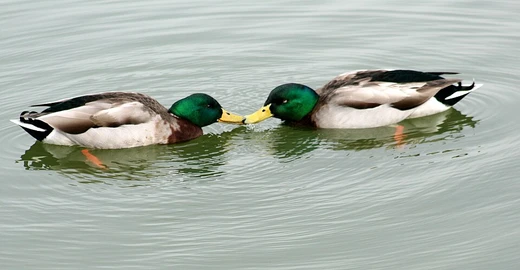
Flock (birds)
Birds gather in flocks for migration, foraging, and predator protection.

A flock is a gathering of individual birds to forage or travel collectively. Avian flocks are typically associated with migration and offer foraging benefits and protection from predators, though flocking can also have costs for individual members. Flocks are often defined as groups of the same species, but mixed flocks of two or more species are common, especially in closed habitats like forests where early warning calls are vital.
- type
- collective behavior
- common_benefits
- foraging benefits, protection from predators
- common_costs
- aggression among individuals, social hierarchy
- mixed_flock_composition
- sallies (aerial guards) and gleaners (vegetation feeders)
- example_species
- European starling, Harris's hawk, black-capped chickadee, Peruvian thick-knee
- phenomenon
- sort sol (black sun) in Denmark
Lore & Background
Mixed flocks consist of two behavioral types: sallies, which guard the flock and catch prey in the air, and gleaners, which consume prey in vegetation. Gleaners flushing insects from plants indirectly increase the foraging rate of sallies. Rarer birds are more likely to join mixed flocks, gaining increased food access and reduced predation risk despite being subordinate. Flocking provides safety from predation through alarm calls, mobbing behavior, and reduced predator success. In Peruvian thick-knees, young learn anti-predator strategies from adults during the nonbreeding season. Black-capped chickadees produce mobbing calls to collectively attack predators. However, as flock size increases, aggression among individuals rises, and flocks fluctuate in size to balance benefits and costs. Foraging in flocks includes the beater effect (capturing prey from unsuccessful flockmates) and the information-sharing model, where the first bird to find food alerts the group. Costs include dominant birds denying food to subordinates and the presence of scroungers that wait for others to find food. Harris's hawks hunt cooperatively in groups of 2–6, surrounding and attacking larger prey together.
Reader's Guide
Flocking is a widespread avian behavior that enhances survival through collective foraging and predator defense. The source article highlights both benefits—such as increased foraging efficiency, mobbing, and reduced predation risk—and costs, including intraspecific aggression and social hierarchies. Mixed flocks demonstrate interspecific cooperation, with sallies and gleaners complementing each other's feeding strategies. The phenomenon of sort sol in Denmark, where European starlings gather in vast numbers, exemplifies how large flocks reduce predation risk during migration. Flocking behavior is not limited to birds; ground squirrels also use alarm calls to warn conspecifics. The article notes that flock size is dynamic, adjusting to maximize benefits while minimizing costs. Understanding flocking provides insight into evolutionary trade-offs between individual and group fitness, as well as the ecological roles of different species within mixed groups.
Did You Know?
- Mixed flocks contain two behavioral types: sallies (aerial guards) and gleaners (vegetation feeders).
- Gleaners indirectly increase the foraging rate of sallies by flushing insects from vegetation.
- Peruvian thick-knees in Chile form flocks averaging 22.5 birds during the nonbreeding season.
- In Denmark, the biannual phenomenon 'sort sol' involves vast flocks of European starlings creating complex shapes against the sky.
More in Animal Behavior 1-23
Spotted an error? Know more?
This is a living reference — every entry is fact-audited, and reader corrections feed straight into our audit queue. Suggest an edit · See this site's audit record